
Route planning
Automated planning suggestions that consider time windows, staff availability and qualifications. Approved by the responsible person.
Industry solution · Home care
Smart AI solutions and automation can relieve home care services with enquiries, organisation, route planning and administration – leaving more time for what matters.
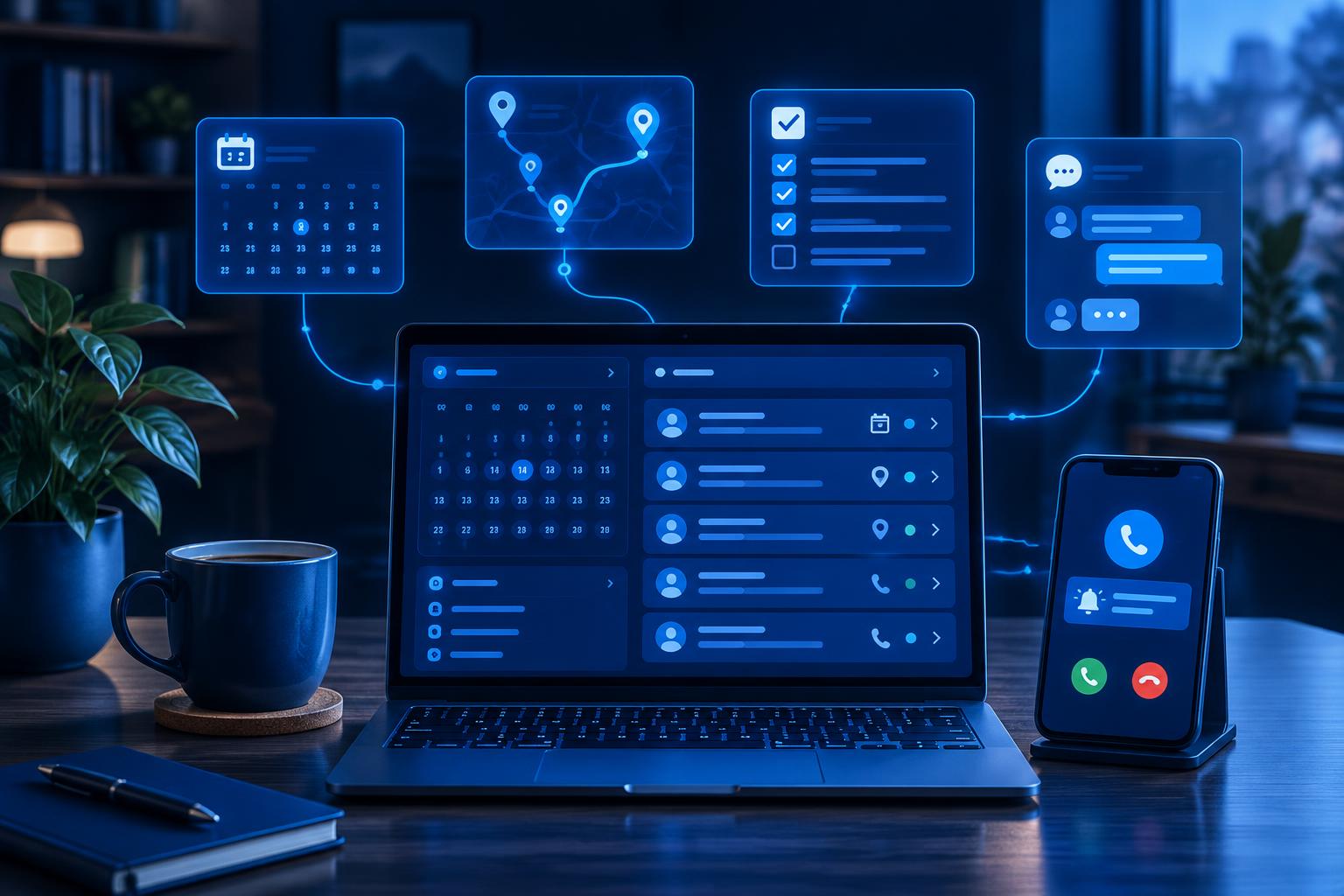
We help home care services simplify administrative processes, automate recurring tasks and create more time for the personal care of their clients.
Care decisions always remain with people. AI only supports organisational and administrative workflows.
Illustrative scenario
Illustrative scenario: the care service described is fictional. This is not an existing client project and no achieved results are shown.
A fictional home care service supports clients in their own homes. Every day, numerous organisational tasks converge in the office:
Staff have to record, sort and assign enquiries to the right people – often while taking calls and running rounds.
A digital care office assistant could take general enquiries, categorise organisational requests and pass on callback requests in a structured way.
1.Enquiry arrives
By phone, email or contact form.
2.Capture details
Only the information needed to process it.
3.Assign category
e.g. new enquiry, callback, application, scheduling.
4.Notify the owner
The responsible person receives a message.
5.A person decides
A staff member handles advice and decisions.
Possible effects – not proven results of an existing client project.
Every solution supports – responsibility stays with your team.
Automated planning suggestions that consider time windows, staff availability and qualifications. Approved by the responsible person.
Structuring and preparing documentation drafts based on authorised input. Professional review is mandatory.
Completeness checks, deadline monitoring and preparation of administrative documents. Existing specialist software remains the lead system.
Coordinating incoming applications, interview appointments and onboarding. No automated HR decisions.
Tap “Before” or “After” to compare the workflows.
Enter your own assumptions – we don't use industry or client figures.
Potential hours saved per month
10.5 h
Calculated value of working time per month
€315
This calculation is for illustration only. Actual savings depend on existing processes. Implementation, maintenance and operation are not included.
Care is about people and highly confidential information. That's why clear principles apply to every automation:
Health data is a special category of personal data and requires a particularly high level of protection.
AI prepares and sorts – decisions about care are made exclusively by qualified people.
Your existing care software remains the lead system. Automations complement it rather than replace it.
Automations only get the permissions they really need – with appropriate roles and rights.
Only necessary data is processed, transferred securely and deleted after defined periods.
Required data processing agreements and data protection reviews are settled before going live.
Real health data is never sent to unvetted AI services – not even for testing.
Under § 8(8) SGB XI, German long-term care insurance funds digitalisation measures in care facilities, for example to relieve care staff and improve workflows.
Not every AI project is automatically eligible. Eligibility and any funding already used must be checked individually. This is not legal or funding advice.
Official information from GKV-Spitzenverband (German)Mainly organisational and administrative tasks: capturing and assigning enquiries, callback lists, scheduling, reminders, completeness checks before billing, deadline monitoring and coordinating applications. Care decisions are not automated.
Yes, as support. A system can create planning suggestions that consider time windows, staff availability and qualifications. The responsible person reviews, adjusts and approves. Feasibility depends heavily on your existing software and its interfaces.
It can, if many general enquiries and callback requests come in. The assistant records organisational requests and forwards them in a structured way. Emergencies, medical questions and health data are outside its scope – callers must be clearly referred to people or emergency services.
That depends on the system. Many offer interfaces or exports, others don't. We check together which connection is possible and sensible. The specialist software remains the lead system.
Through data minimisation, access controls, encrypted transfer, clear deletion periods and vetted services with a data processing agreement. Before going live, data protection review and, if needed, an impact assessment should be completed with your responsible staff.
In Germany, under § 8(8) SGB XI, approved care facilities can currently receive a one-off grant of up to 40% of eligible costs, max. €12,000, until the end of 2030. Not every AI project is automatically eligible – eligibility and amounts already used must be checked individually.
With the free AI potential check. Briefly describe your workflows, and in a no-obligation call we show where relief is realistic – and where it isn't.
Optional: pick the areas that cost you the most time. We'll carry your selection into the potential check.